Case 22Esotropia / Strabismus
Clinical Presentation
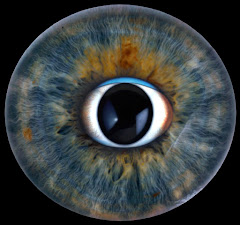
This child is brought to you by her distraught mother who was told 6 months ago that her daughter would 'grow out of' the eye problem depicted.
Learner Questions
- Describe the physical findings.
- Outline your diagnostic workup.
- What is the diagnosis?
- What is the usual cause of this condition in this age group?
- Discuss other possible etiologies.
- Describe your plan for management.
Answer Framework
Findings
ESOTROPIA - one or both eyes deviated inward (medially). Hirschberg test confirms true deviation: corneal light reflex displaced temporally in deviated eye. Differentiate from PSEUDO-ESOTROPIA (wide nasal bridge + epicanthal folds - Hirschberg normal - most common reason for false reassurance).
Usual cause
Infantile ET: idiopathic (supranuclear vergence dysfunction); associated with prematurity, CP, hydrocephalus, Down syndrome. NOT caused by hyperopia. Accommodative ET: high hyperopia (+3.00D or more) -> excessive accommodative effort -> drives excessive convergence via the accommodation-convergence reflex.
Workup
Hirschberg test, cover-uncover + alternate cover test (measures deviation), CYCLOPLEGIC REFRACTION (mandatory - reveals true refractive error; hyperopia suggests accommodative ET), dilated fundus exam (rule out retinoblastoma, cataract, optic nerve hypoplasia causing sensory esotropia), assess abduction (rule out CN VI palsy).
Other etiologies
CN VI palsy (limited abduction, esotropia, causes: birth trauma, up ICP, brainstem tumor), Duane retraction syndrome (limited abduction + globe retraction + fissure narrowing on adduction - anomalous CN VI/III innervation), Myasthenia gravis (variable strabismus, ptosis, fatigability), Möbius syndrome (bilateral CN VI + VII palsies).
Diagnosis Management
Infantile (Congenital) Esotropia: onset <6 months, large-angle (>30 PD) constant deviation, Goals: (1) Treat amblyopia, (2) restore alignment, (3) preserve/develop binocular vision. no significant hyperopia. OR Accommodative Esotropia: onset 18 months-3 years, Amblyopia: patch dominant eye (2 hr/day per year of age). Refractive: full hyperopic significant hyperopia on cycloplegic refraction, correctable with full spectacle correction. glasses; trial x 3 months before surgery. Surgery: bilateral medial rectus recession (6-18 Children do NOT 'grow out of' true strabismus. months age for infantile ET - earlier surgery = better binocular fusion chance).
Teaching Pearl
Children do NOT grow out of true strabismus - 'they'll grow out of it' causes preventable amblyopia and permanent loss of stereopsis. Pseudo-esotropia (wide nasal bridge + epicanthal folds, normal Hirschberg) is the most common reason for false reassurance. Sensitive period for binocular vision development closes around age 7-9 - treat before age 3-4 for best outcome.
Original answer transcript
Findings Usual cause
ESOTROPIA - one or both eyes deviated inward (medially). Hirschberg test confirms true Infantile ET: idiopathic (supranuclear vergence dysfunction); associated with prematurity,
deviation: corneal light reflex displaced temporally in deviated eye. Differentiate from CP, hydrocephalus, Down syndrome. NOT caused by hyperopia. Accommodative ET: high
PSEUDO-ESOTROPIA (wide nasal bridge + epicanthal folds - Hirschberg normal - most hyperopia (+3.00D or more) -> excessive accommodative effort -> drives excessive
common reason for false reassurance). convergence via the accommodation-convergence reflex.
Workup Other etiologies
Hirschberg test, cover-uncover + alternate cover test (measures deviation), CYCLOPLEGIC CN VI palsy (limited abduction, esotropia, causes: birth trauma, up ICP, brainstem tumor),
REFRACTION (mandatory - reveals true refractive error; hyperopia suggests Duane retraction syndrome (limited abduction + globe retraction + fissure narrowing on
accommodative ET), dilated fundus exam (rule out retinoblastoma, cataract, optic nerve adduction - anomalous CN VI/III innervation), Myasthenia gravis (variable strabismus,
hypoplasia causing sensory esotropia), assess abduction (rule out CN VI palsy). ptosis, fatigability), Möbius syndrome (bilateral CN VI + VII palsies).
Diagnosis Management
Infantile (Congenital) Esotropia: onset <6 months, large-angle (>30 PD) constant deviation, Goals: (1) Treat amblyopia, (2) restore alignment, (3) preserve/develop binocular vision.
no significant hyperopia. OR Accommodative Esotropia: onset 18 months-3 years, Amblyopia: patch dominant eye (2 hr/day per year of age). Refractive: full hyperopic
significant hyperopia on cycloplegic refraction, correctable with full spectacle correction. glasses; trial x 3 months before surgery. Surgery: bilateral medial rectus recession (6-18
Children do NOT 'grow out of' true strabismus. months age for infantile ET - earlier surgery = better binocular fusion chance).
TEACHING PEARL
Children do NOT grow out of true strabismus - 'they'll grow out of it' causes preventable amblyopia and permanent loss of stereopsis. Pseudo-esotropia (wide nasal
bridge + epicanthal folds, normal Hirschberg) is the most common reason for false reassurance. Sensitive period for binocular vision development closes around age 7-9
- treat before age 3-4 for best outcome.